
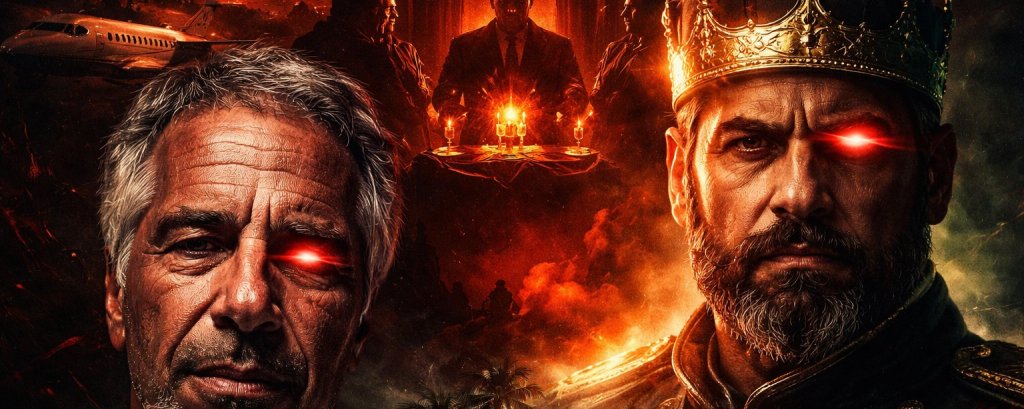
In Episode 3, “The Monster Group,” a narrative detonates the core revelation of the series that changes everything. King Asilas confesses that the visible political world is merely theater. Behind its slick exterior stands a concealed fraternity of planners. Standing in the shadows of “dark halls” are evil men, orchestrating leaders, manipulating social tensions, and guiding history like chess pieces. He calls them Monsters. Not their real name, but certainly a fitting one.
For people attuned to real-world intrigue, it is difficult not to feel echoes of modern controversies, especially the public fascination surrounding the “Epstein files.” It begs us to explore why certain patterns in the story feel so compelling to those who enjoy connecting the dots and have followed the show’s storyline. When one listens to episodes (especially in Seasons 1-2), it doesn’t land the same way anymore. The details emerging from the Epstein files have changed how one can truly take in the content of the series.
The Anatomy of the Monster Group
In Episode 3, Asilas admits he once belonged to the secret elite. With so many names redacted, one can surmise that those who claim to “champion” justice are within the orbit of perpetrators named in those files or in the files themselves. Thus, having the fictitious character Asilas also come from within the circle of fiends seems to be in alignment with what is currently coming to light. Ultimately, it cannot be an outsider railing against power; it has to be an insider-turned-defector.
So, let’s explore what the episode suggests. First, political leaders are selected, not elected. Even the simplest of Lehman have long said this out loud, either in jest or blurted intuition. Second, social chaos is engineered. Many conspiracy theorists have been shouting from the hills for decades that the collapse of the Western world is designed to usher in the New World Order. However, the idea that the public is given a curated version of reality isn’t unique to modern society. For as long as civilizations existed, doubt among commoners has persisted when it comes to “believing” what their leaders say outright.
The emotional power of this confession lies in its plausibility. There are no laser beams or alien invasions. At least, not yet. Instead, the horror is bureaucratic (i.e., cigars, exotic drinks, smoky rooms, long discussions about shaping society). The idea that the fate of the world rests in the diabolical plans of a few is unsettling, to say the least. But deep down inside, we know it.
The terror is systemic.
For the conspiracy-minded, this framework feels familiar. Secret meetings. The King and Capone drinking whiskey and planning the death of billions of people. Elite networks. Influence traded in private. The suggestion that what we see is not what is decided.
Listen to Episode 3 (again or for the first time).
The Epstein Files: Catalyst for Suspicion
When documents connected to Jeffrey Epstein and his associates began surfacing publicly through court cases and investigative reporting, the cultural impact was explosive. Names, flight logs, private island references, and redacted files fueled an already simmering suspicion that powerful people operate by different rules. And not just different rules, inhumane and ungodly rules. Some of the information being revealed suggests torture, ritualistic murder, and even cannibalism. It’s disgusting and (for some) completely unbelievable.
Why aren’t people filling the streets with outrage?
Because the situation presented elements that resonate with the “Monster Group” archetype that puts the illusion we’ve all been fed our entire lives on its head. It’s no longer a creepy, horror film or scary campfire story designed to spook the bejesus out of you. It’s starting to set in that this crazy talk is real. And the people engaging in all the “gross stuff” (to quote President Jackson in Season 1) are people we all know very well. They are the wealthy, the rich, and the famous. People we’ve looked up to, people we’ve aspired to be like, people we admired. It’s them, and we want to wake up from this nightmare. But it is true. All of it. And the Epstein files are exposing just how terrifying that secret society truly is. To think: there is still much more we haven’t been shown.
The Psychology of Pattern Recognition
Episode 3 leverages a powerful human instinct: pattern-seeking. Asilas’ analogy about children believing in Santa Claus is pivotal. He argues that society operates under comforting illusions. Once the illusion dissolves, nothing feels stable again. This mirrors how many people describe their reaction to learning about Epstein’s crimes and the elite social circles around him. The idea that wealthy and influential individuals could be entangled in secretive behavior triggers a psychological shift. It invites a broader question:
If this happened, what else could be happening?
That leap is where fiction and speculation thrive.
One of Episode 3’s most compelling elements is Asilas’ transformation. He was not merely aware of the Monster Group; he helped plan its operations. He climbed its ranks. Then he defected. This trope is central to conspiracy culture: the whistleblower. The insider who knows the machinery and chooses to reveal it. In real-world discussions around Epstein, the public has gravitated toward journalists, investigators, and unnamed “sources” who allegedly have deeper knowledge. The idea of someone within the system pulling back the curtain is intoxicating. It satisfies a narrative hunger: redemption through revelation.
The reality, of course, is often far more fragmented and mundane. Legal processes are slow. Evidence is complex. Motives are unclear. But in fiction, clarity is dramatic. A secret society exists. The king knows. The war begins.
“Monsters” as Metaphor
Episode 3 deliberately blurs whether the Monster Group members are metaphorical or literal monsters. Asilas hints that “most of them are not people like you and I.” It could be spiritual symbolism. It could be moral language. Or it could be a literal suggestion within the show’s mythos. Conspiracy theorists frequently adopt similar metaphors in discussing elites. Terms like “monsters,” “demons,” or “reptiles” often function symbolically, expressing perceived moral corruption rather than biological difference.
The language becomes mythic.
And myth is powerful.
The Epstein scandal, while grounded in documented criminal behavior, became mythologized online. Threads spiraled into claims of occult symbolism, ritualistic power structures, and global cabals. But with more details coming to light, with more interpretations and commentary, memes, and TikTok shorts bombarding the masses with images, blacked out faces of literal horror shows, emails with coded, sadistic, and evil messages, our collective heads are spinning. People are going back, reading old blogs and Reddit stories, and literature from Alex Jones.
They all read like a thriller.
The Emotional Core: Betrayal
At its heart, Episode 3 is not about monsters. It is about betrayal. Asilas feels betrayed by the system he served. The audience is meant to feel betrayed by institutions. The Epstein scandal similarly triggered a sense of betrayal. Many citizens asked:
How could this have happened for so long? Who knew? Who looked away?
The mere existence of elite impunity for years created fertile ground for distrust. And distrust is the soil in which conspiracy grows. For those who navigated the dark side of this world, reading fringe, self-published books about the subject of secret societies, and trolling the Internet for breadcrumbs of the cabal on 4chan and other places, the Epstein files are vindication. But no one is celebrating being right about this. Even I, who wrote (arguably) the most epic fiction podcast in the world, there is no glory in being right about this darkness. King Asilas is an archetype, a metaphor, a symbol of a collective scum that dogs humanity’s potential. The bane of achieving peace and prosperity. For in the name of saving humanity, the king ushers in Armageddon and the end of civilization. But none of those happened until King Asilas did one very crucial thing: he hunted those in the Monster Group. And if there is anything that resembles this action in real life, it’s the hunt for those in the infamous Jeffrey Epstein’s client list.
Why These Parallels Fascinate
It is crucial to reiterate: Episode 3 is fiction. The Epstein case, while involving documented crimes and legal proceedings, does not provide verified evidence of a supernatural or unified “Monster Group” controlling governments. But if something smells like excrement, well, there’s only one thing that smells like that. Therefore, the parallels are psychologically compelling and cannot be ignored. Simply put, they reflect archetypes:
- The hidden council.
- The compromised elite.
- The reluctant king who defects.
- The war against unseen forces.
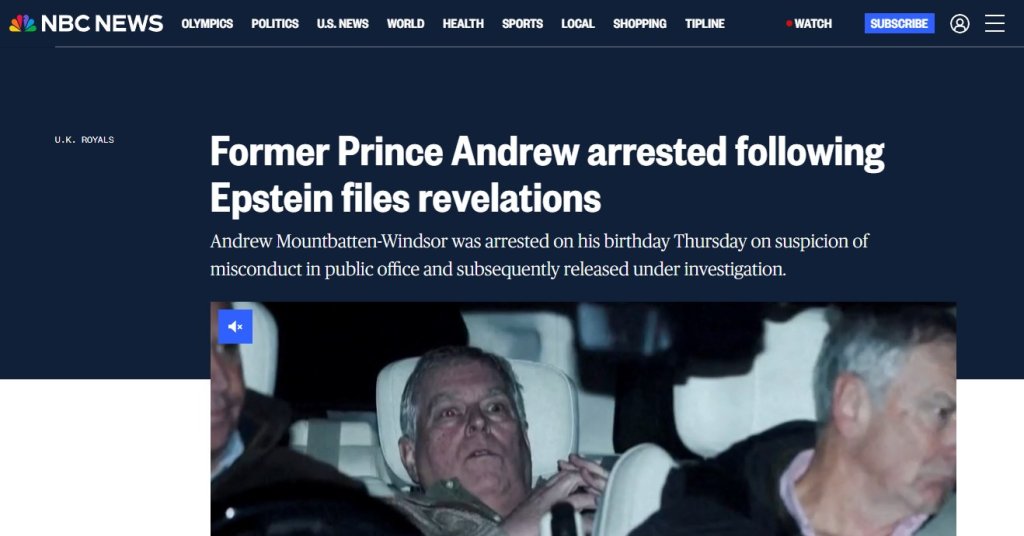
When real-world scandals reveal genuine corruption, they validate the emotional core of these archetypes—even if they do not confirm the grandest interpretations. For conspiracy theorists, the connection is not about proof. It is about pattern resonance. Such as King Asilas’s obsession with hanging the British Royals. And who was arrested on his 66th birthday? The former Prince Andrew.
The Final Question
In Episode 3, Asilas says that learning the truth changes everything. And he’s right. The moment corruption is no longer abstract, no longer rumor, but a documented, undeniable reality, the mind shifts. Certainty fractures. Trust erodes. And in that fracture, something else seeps in.
When people glimpse real corruption, they don’t just become cautious. They become receptive to grand narratives, to hidden architects, to monsters in the dark. The line between vigilance and imagination begins to blur. So what stalks the halls of power? Are there literal monsters pulling strings in secret chambers? Or are there simply flawed human beings—ambitious, afraid, and armed with too much authority?
Reality is rarely as cinematic as fiction. Power is usually more banal than demonic. But in a world saturated with scandal, secrecy, and betrayal, the shadow always feels alive.
And once we believe something is hiding in the dark… we will never stop searching for it.
 The Rise of King Asilas